
Insulated plasterboard
Insulated Plasterboard in Bath
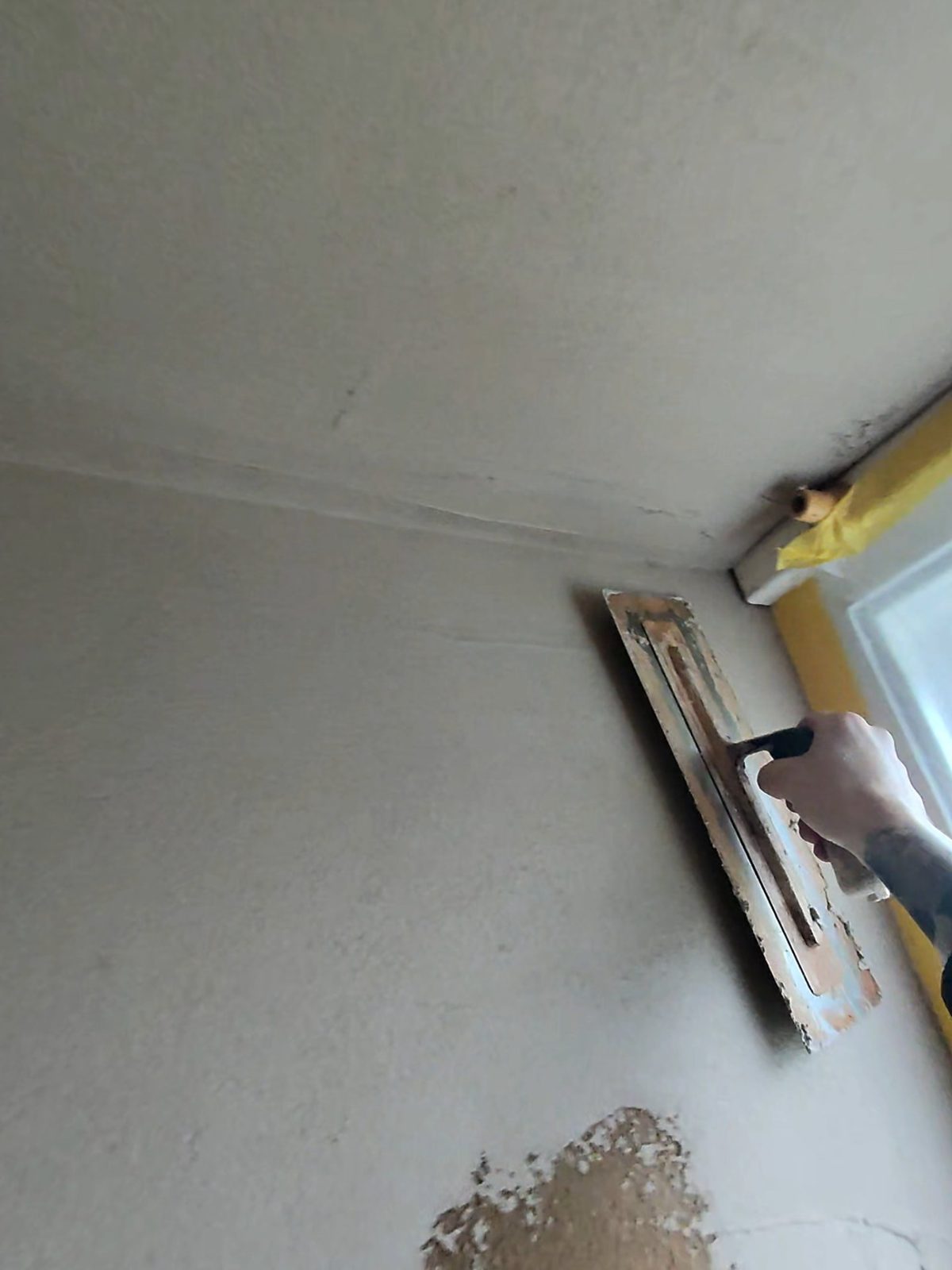
PIR-backed insulated board fitted to cold external walls and skimmed to a smooth finish — where the room can give up the depth it needs.
The problem
Cold External Walls in Bath Homes
- An external wall that's cold to the touch, especially low down
- One room that stays chilly while the rest of the house is fine
- Black spotting behind wardrobes or in the corners each winter
- A room being renovated anyway, where the walls are coming back to bare
- An extension or back addition that was never insulated properly
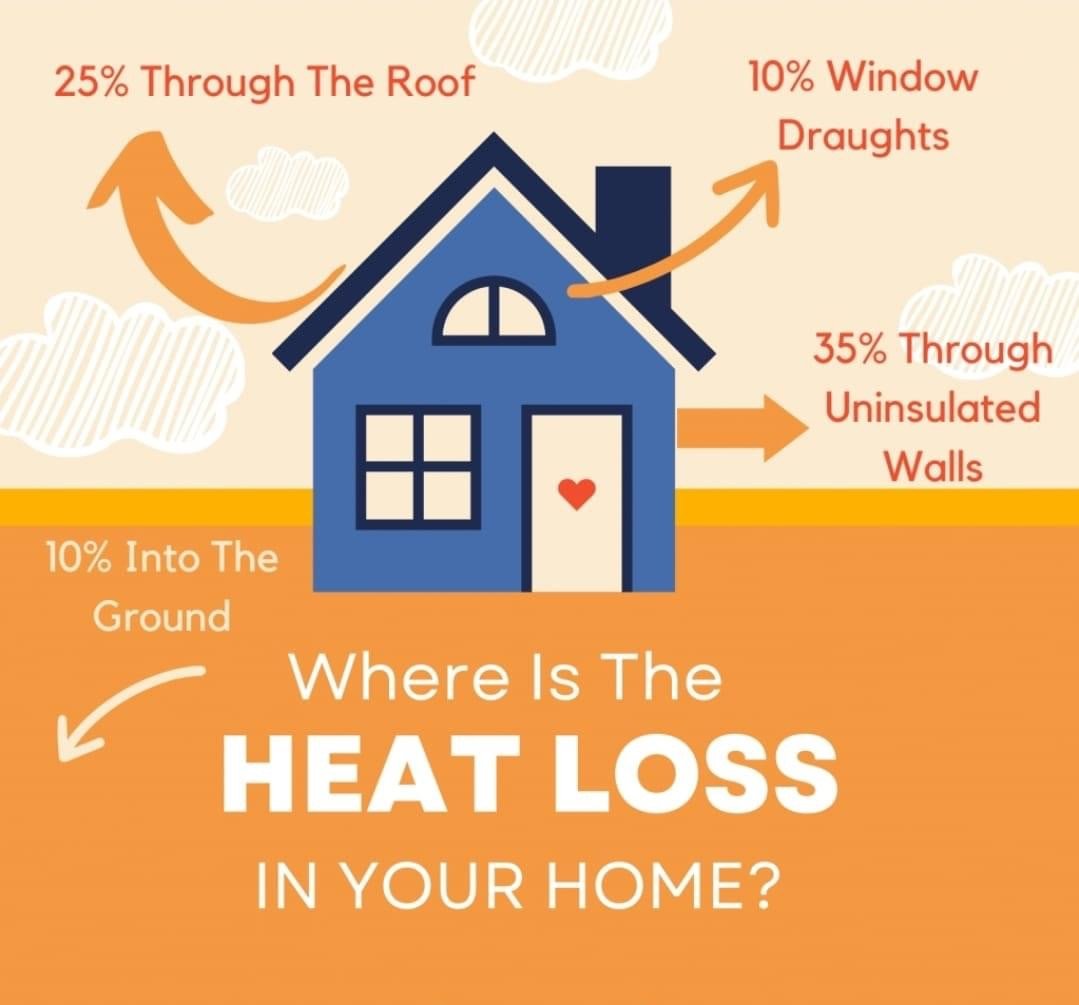
Where a wall has no cavity or a cavity that was never filled, the inside face sits cold. That makes the room harder to heat and gives moisture in the air a cold surface to collect on. Condensation can have more than one cause, so heating, ventilation and any existing moisture problem are worth looking at too.
The options
Insulated Board, or Something Thinner
Insulated plasterboard is a good answer on the right wall in the right room. It isn't the only answer, and it isn't right everywhere.
PIR-backed insulated plasterboard
A rigid insulation board bonded to plasterboard, fixed to the wall and skimmed. It gives the strongest thermal improvement of the internal options we fit, and suits rooms being renovated anyway, where the walls are already back to bare.
Thin cork-based insulation
A breathable coat trowelled on and plastered over, for rooms where losing depth isn't acceptable or where the wall is better kept breathable — see cork insulation. Thinner, so the improvement is more modest.
One wall or one bay
Most homes have one or two problem walls rather than a cold house. Treating the wall or bay window that's actually causing the trouble is usually the proportionate job.
We don't publish U-values, temperatures or energy savings for your wall, because they depend on the actual build-up in front of us.
How we work
Fitting and Finishing Insulated Board
Boarding and plastering as one job, so there's no arguing over whose fault a rough patch is.
- 01
Check the wall
We look at what the wall is built from, how it's behaving and whether a sealed board build-up is appropriate at all.
- 02
Strip and prepare
Sockets, radiators, skirtings and architraves come off, the wall is prepared and any loose plaster removed.
- 03
Fit the board
Insulated board fixed to the wall and carried into reveals and returns, with fixings and joints set out properly.
- 04
Skim and reinstate
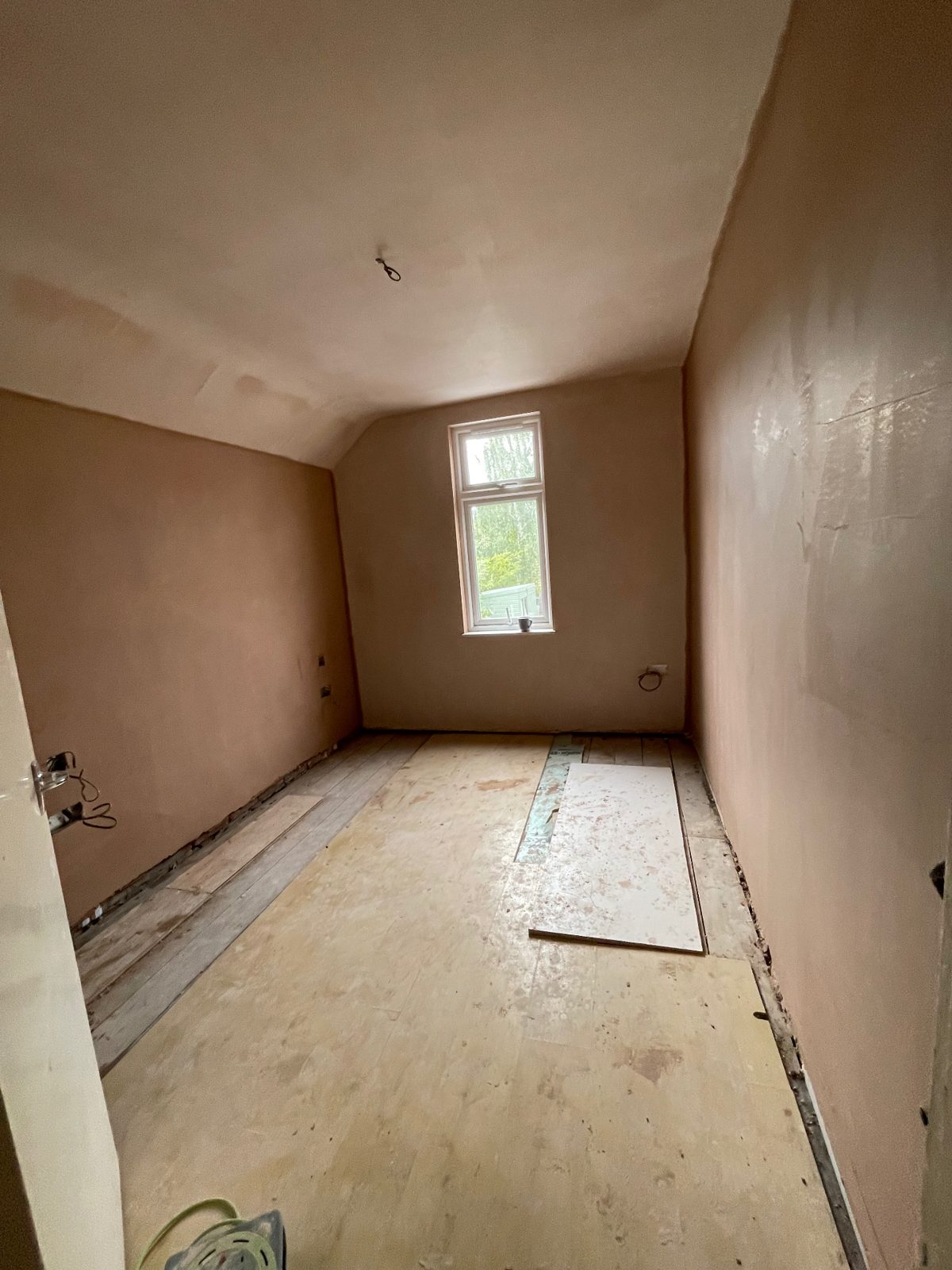
Joints taped, the wall skimmed flat, fittings refitted and the room left clean and ready to decorate.
Why homeowners use DSB
One Team for the Insulation and the Finish
Insulating a wall is only half of it — what you look at afterwards is the plaster. We fit the board and skim it ourselves, so the finish is our responsibility from start to end.
Rooms are sheeted, fittings refitted, waste taken away, and you get a straight answer on how much depth you'd lose before any decision is made.
Questions
Insulated plasterboard questions
How much room will insulated plasterboard take up?+
More than a thin coating — the board itself plus the fixing method. In a small room that matters, which is why we measure and show you what you'd actually be giving up before you commit.
What happens to sockets, radiators and skirting?+
Sockets are brought forward, radiators come off and go back, and skirtings and architraves are refitted. Reveals around windows are finished neatly so it doesn't look boxed out.
Will it stop mould in the corner?+
It makes the wall surface warmer than the bare wall was, which reduces the conditions that encourage surface condensation. It isn't a cure on its own — heating, ventilation and any real damp source still need addressing.
Can it go on any wall?+
No. On some older solid walls a breathable build-up is the better answer, and a sealed board finish can be the wrong choice. We look at the wall first rather than fitting the same thing everywhere.
Do you plaster it afterwards?+
Yes. Joints are taped and the boards are skimmed to a smooth finish ready for the decorator, by the same team that fitted them.
Related services
- Internal wall insulation in Bath
The full picture on insulating solid and cold external walls.
- Cold walls and condensation
Why walls run cold and what actually helps.
- Plastering services in Bath
Skimming, boarding and full-room replastering.
Request a quote
Get an Insulated Plasterboard Quote
Send photos of the wall and the room with your postcode, and we'll tell you whether board or a thinner system is the sensible answer.
Prefer to talk it through? Call 07437 217926.
Or send photos with the quote form